Mirror-integrated sensing
- Camera seamlessly integrated within the interior mirror
- Unobstructed view of the driver and vehicle cabin
- Supports discreet vehicle integration
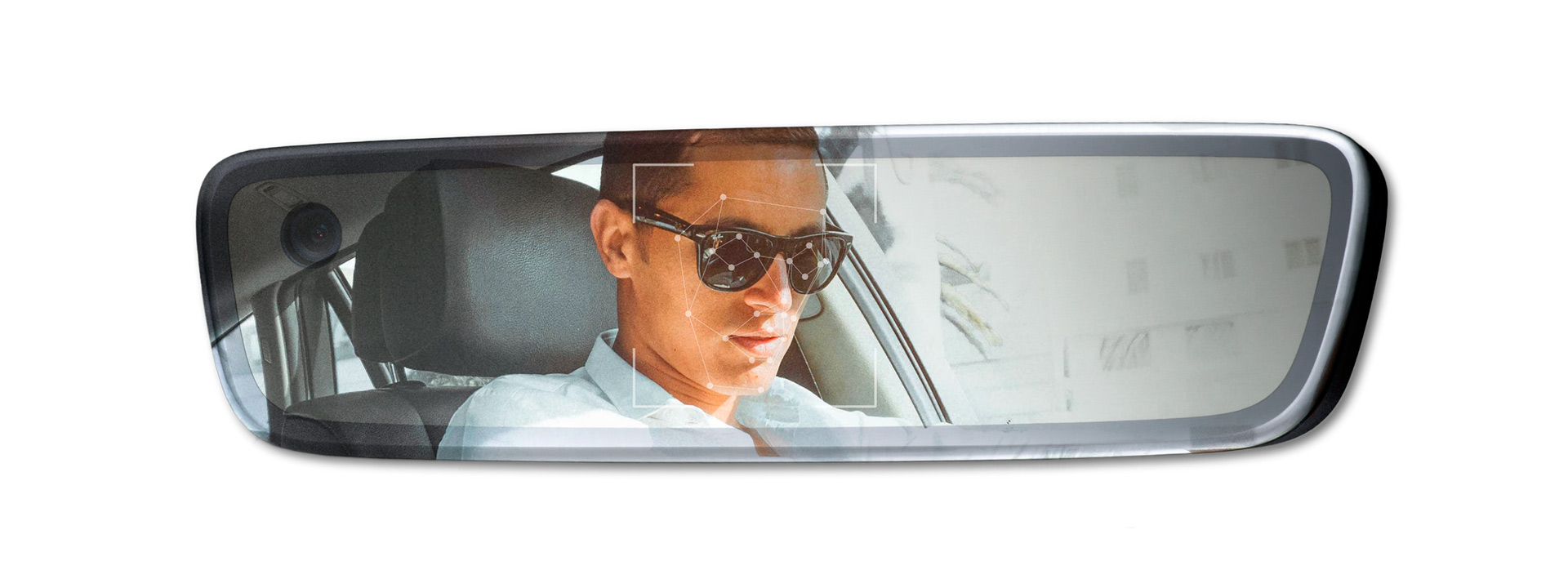
Enhancing vehicle safety through mirror-integrated Driver and Occupant Monitoring.

Magna's Mirror Integrated Driver & Occupant Monitoring System combines advanced camera technology, interior mirror integration and intelligent sensing to support safer, more connected vehicle interiors. By positioning the camera within the interior mirror, the system provides an unobstructed view of the driver and cabin while minimizing additional hardware within the vehicle.
Designed as a scalable solution, the platform supports a range of in-cabin sensing features that help OEMs address evolving safety requirements while enhancing system integration and interior design flexibility.
Integrating the camera within the interior mirror provides an optimal vantage point for monitoring both the driver and vehicle occupants. This centralized sensing location enables reliable driver monitoring while supporting additional in-cabin sensing features such as occupant detection, child presence detection, seat belt detection and future interior monitoring capabilities.
By integrating multiple functions into a single component, the system helps reduce additional cabin-mounted hardware, simplifies vehicle integration and preserves interior aesthetics.
Discover the ultimate interior visibility with our Mirror Integrated Driver and Occupant Monitoring System. Designed for any vehicle, any driver and any passenger, this seamless innovation ensures a clear view inside every time.
A Mirror Integrated Driver & Occupant Monitoring System is an in-cabin sensing solution that integrates the sensing hardware within the interior rearview mirror, providing an unobstructed view of the driver and vehicle cabin. Using advanced cameras and intelligent software, the system continuously monitors driver attention and occupant conditions to support safety, comfort and convenience features. The scalable platform supports capabilities such as driver monitoring, occupant detection, child presence detection, seat belt detection and additional interior sensing features, helping OEMs address evolving safety requirements while reducing system complexity through seamless mirror integration.
Driver Monitoring Systems improve safety by continuously assessing whether the driver is attentive and able to take control of the vehicle. Using advanced sensing and algorithms, they detect distraction, fatigue, cognitive overload or impairment and trigger timely alerts or interventions.
This helps prevent accidents caused by human factors, which remain one of the leading causes of road incidents. In more advanced systems, monitoring is directly linked to ADAS functions, enabling safe handover strategies and ensuring that automated features are only active when driver readiness is confirmed.
Occupant Monitoring focuses on detecting and understanding passengers inside the vehicle, not just the driver. It identifies seating position, movement, and occupant presence, and can detect unsafe situations such as unbelted passengers or forgotten occupants.
This capability is increasingly important for meeting evolving safety regulations and assessment programs, including current and future NCAP requirements, while also supporting enhanced in-cabin comfort and personalization. By providing greater visibility into the vehicle interior, occupant monitoring enables more effective occupant protection strategies, supports automated driving applications, and enhances overall passenger safety.
As vehicles move toward higher levels of automation, monitoring systems become essential to ensure safe interaction between human and machine. Driver Monitoring verifies whether the driver is ready to take over control when required, which is critical for Level 2 and Level 2+ systems.
At the same time, occupant monitoring enables new use cases in automated driving scenarios, such as flexible seating positions or enhanced comfort features. Together, these systems create the trust and safety layer needed to transition from assisted to increasingly automated driving.
Unlike systems that require dedicated cameras or additional cabin-mounted hardware, Magna integrates Driver & Occupant Monitoring directly within the interior mirror. This centralized location provides an unobstructed view of the driver and vehicle cabin while simplifying system integration.
Mirror integration helps reduce the number of visible components within the cabin, lowering system complexity and overall vehicle integration effort. It also supports a more discreet interior design, preserves styling flexibility and provides a scalable platform for additional in-cabin sensing functions as vehicle technologies continue to evolve.

